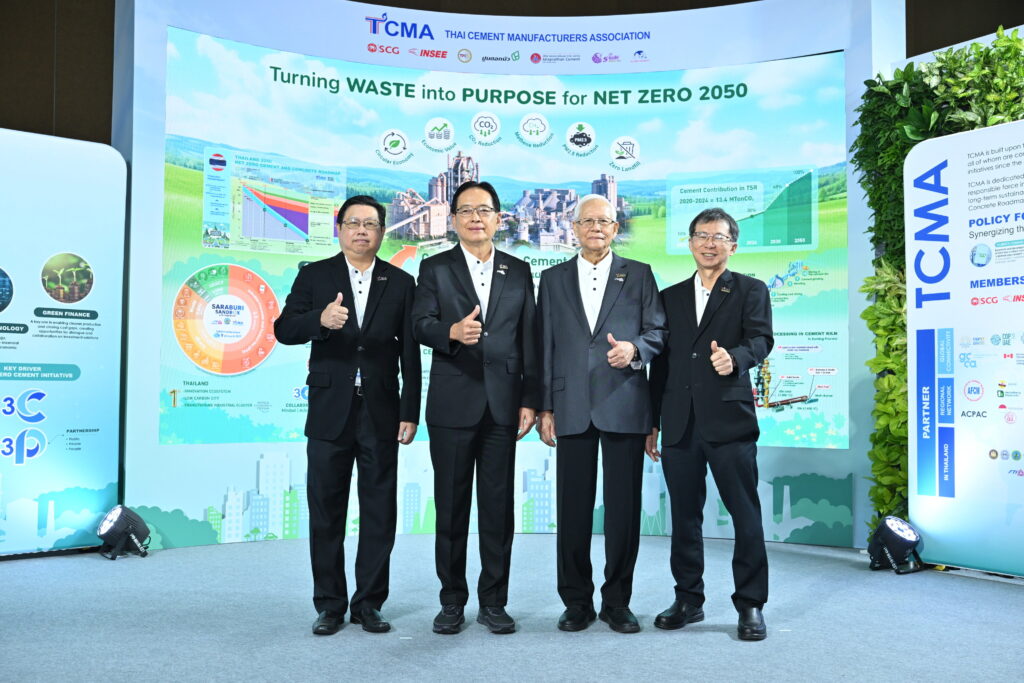
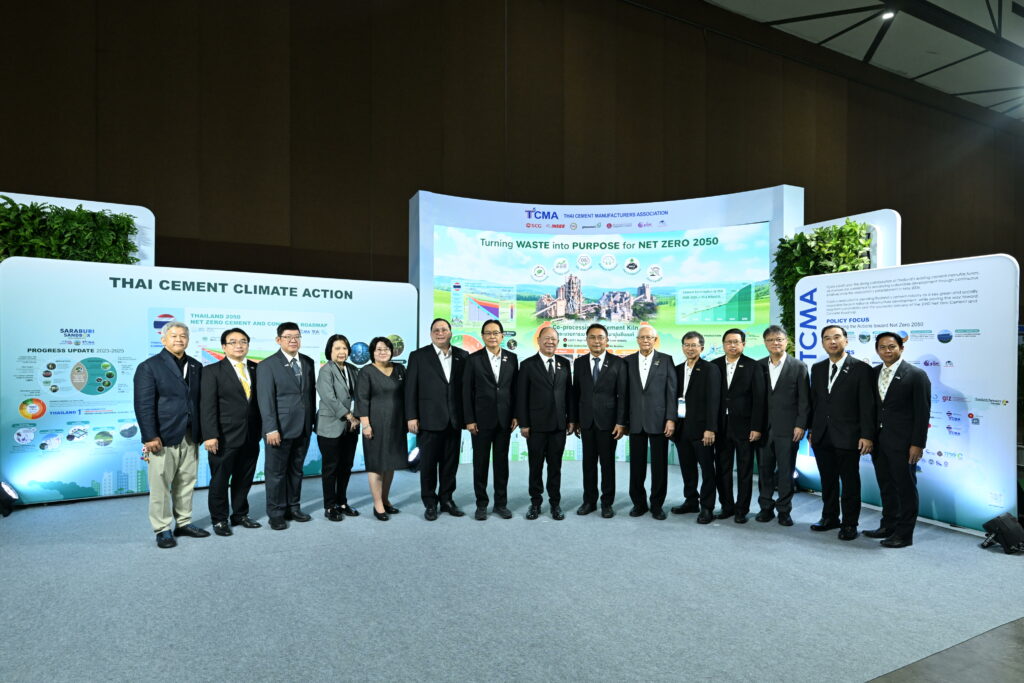
Thai Cement Manufacturers Association (TCMA) reaffirmed the role of the cement industry as a key national mechanism in supporting systematic waste management, reducing greenhouse gas emissions, and creating economic value through co-processing in cement kilns, under the theme “Turning Waste into Purpose for Net Zero 2050.” The initiative reflects collaboration among all cement producers in Thailand, alignment with government policy, and area-based implementation through the SARABURI SANDBOX, contributing tangibly to Thailand’s Net Zero 2050 ambition.
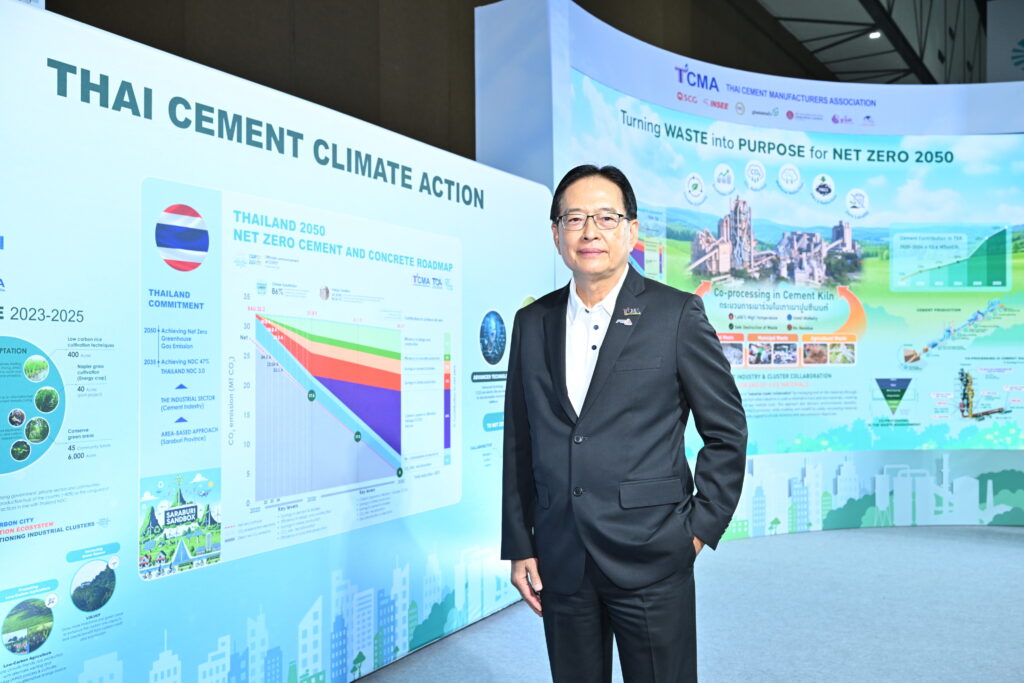
Mr. Nopadol Ramyarupa, Vice Chairman of TCMA stated that TCMA, representing all cement manufacturers in Thailand participated in Asia Environmental and Waste Management Expo (Asia EnwastExpo) to communicate the cement industry’s role as a structural solution that integrates waste management, carbon reduction, and national competitiveness.
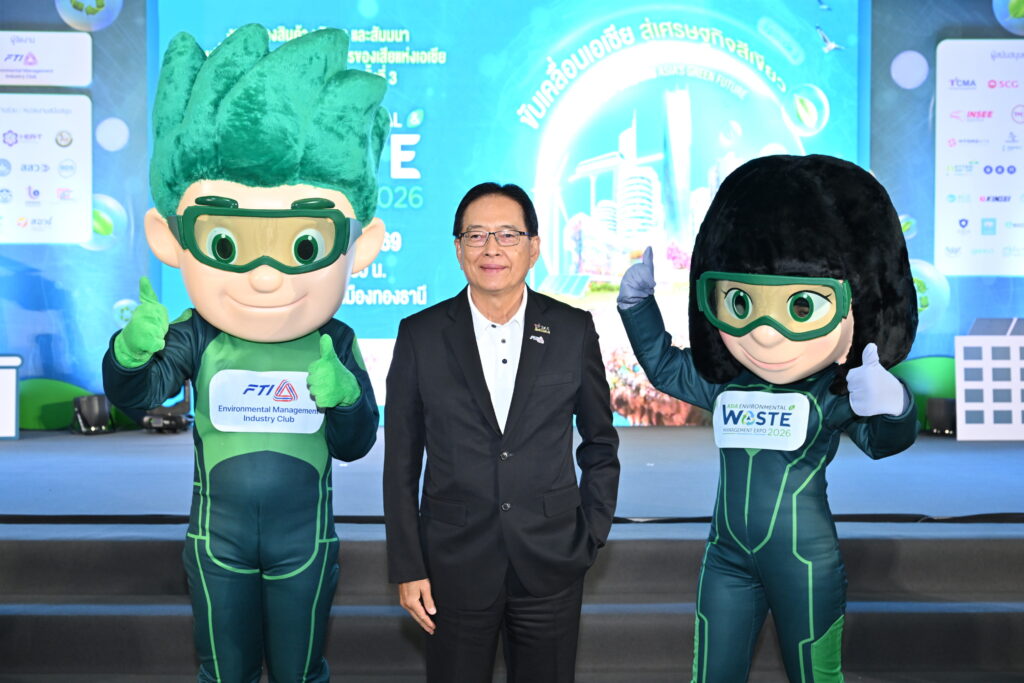
“TCMA works collectively at the industry level to systematically reduce greenhouse gas emissions and support Thailand’s transition to a low carbon economy. The Thai cement industry benefits from high temperature production processes, nationwide infrastructure, and internationally recognized environmental control standards, enabling safe and efficient waste management,” said Mr. Nopadol.
TCMA’s efforts align with Thailand 2050 Net Zero Cement and Concrete Roadmap, consistent with the global direction set by Global Cement and Concrete Association (GCCA), which recognizes co-processing and circular economy practices as key levers toward achieving Net Zero 2050 while maintaining industrial competitiveness. Co-processing is a globally accepted and widely implemented practice, operating under strict environmental monitoring and international standards.
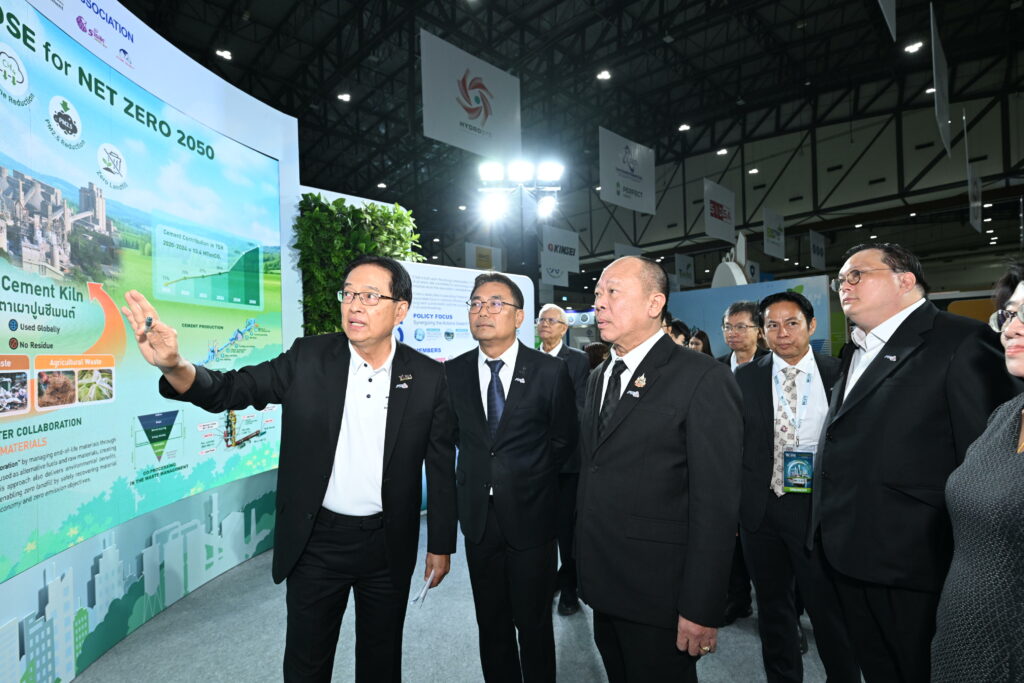
Thailand’s cement industry has strong potential to serve as a system level solution for waste management. Cement kilns operate at temperatures of up to 1,450°C, enabling the complete and safe destruction of waste without residual by-products and without affecting cement quality. Combined with a nationwide network of cement plants, this infrastructure allows waste management solutions to be scaled rapidly while reducing system-wide costs.
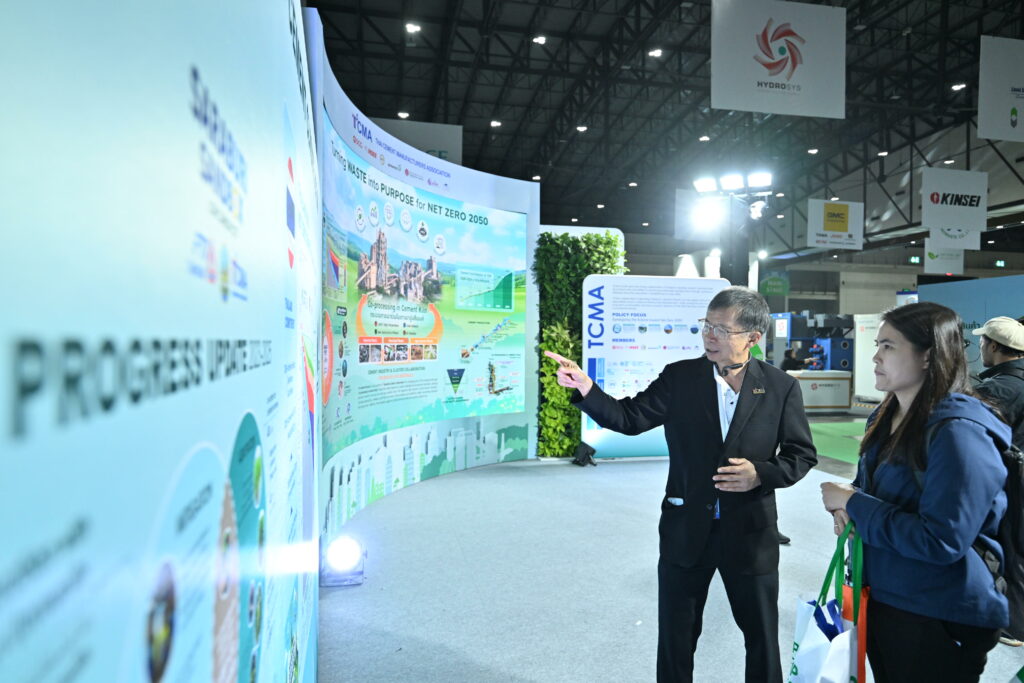
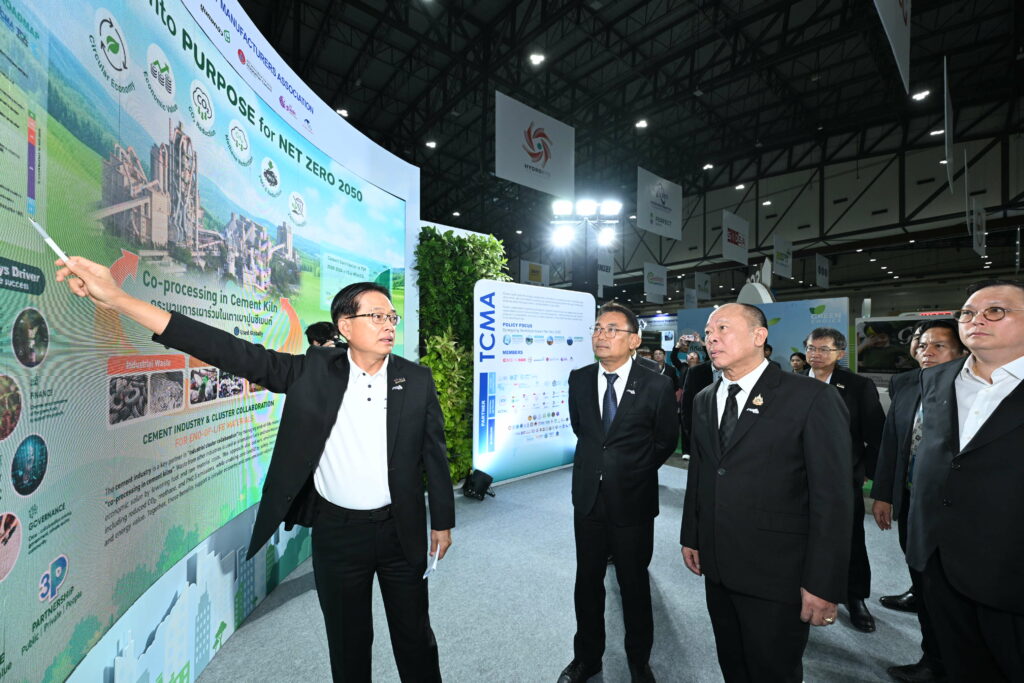
A core mechanism promoted by TCMA is co-processing in cement kilns, where waste materials are utilized as alternative fuels and raw materials in cement production. This approach advances the circular economy by transforming waste into economic value, reducing fossil fuel consumption and dependence on natural resources, supporting government waste management and climate policies, and cutting emissions of carbon dioxide and methane. It also helps mitigate PM2.5 air pollution and significantly reduces landfill disposal, one of Thailand’s major environmental challenges.
“Co-processing is a measurable and proven circular economy solution. Through industry wide collaboration, TCMA members reduced greenhouse gas emissions by more than 13.4 million tons of CO₂ equivalent between 2020 to 2024. The industry aims to increase the Thermal Substitution Rate (TSR) to 68% by 2030 and 100% by 2050, in line with the industry roadmap and Thailand’s Nationally Determined Contribution (NDC) targets,” Mr. Nopadol said.
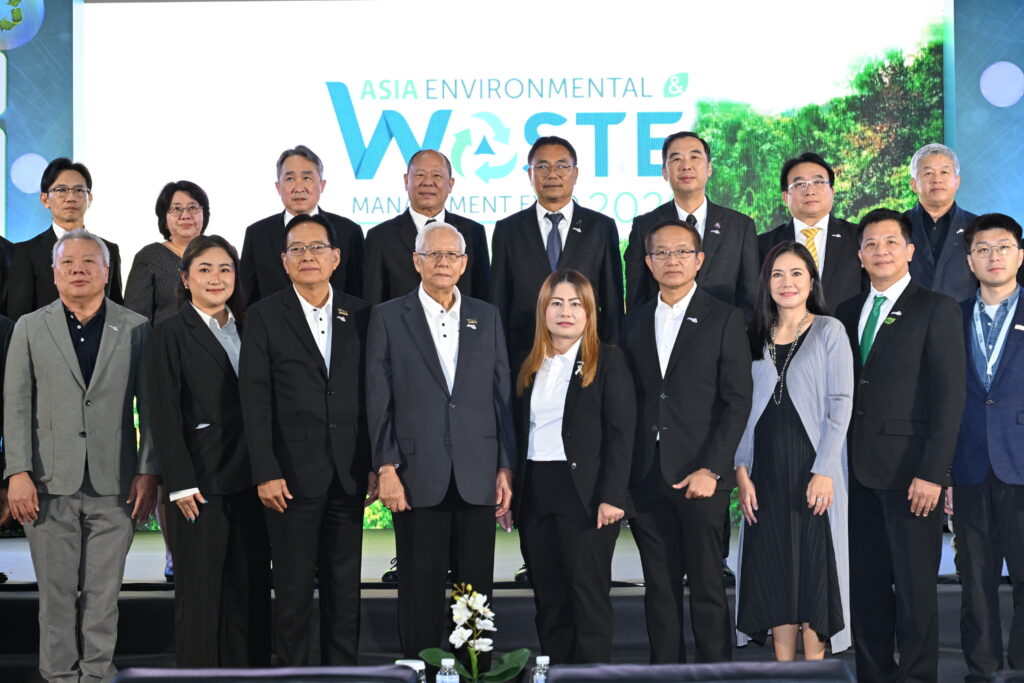
At the same time, TCMA continues to advance the SARABURI SANDBOX as a pilot area that integrates waste management through co-processing in cement plants with collaboration among government agencies, industry, and civil society. By leveraging cement plants as core infrastructure for safe waste treatment, along with international support for technology and financing, the initiative demonstrates that carbon reduction, effective waste management, and local economic development can progress simultaneously, with strong potential for replication in other regions.
“When the strengths of Thailand’s cement industry are combined with supportive public policies and concrete area-based implementation, co-processing becomes more than an environmental solution, it is a key driver of national competitiveness and a practical pathway toward Thailand’s Net Zero 2050 goal,” Mr. Nopadol concluded.